Measure the current process
Utility flow, steam use, compressed air, water intake, and temperature profiles need stable instrumentation before reduction targets become credible.
Sustainability roadmap
Energy, emissions, water, waste, and quality programs all depend on field readings that operators trust. The sustainability value of instrumentation begins when the reading is accurate enough, documented enough, and maintained enough to guide action.
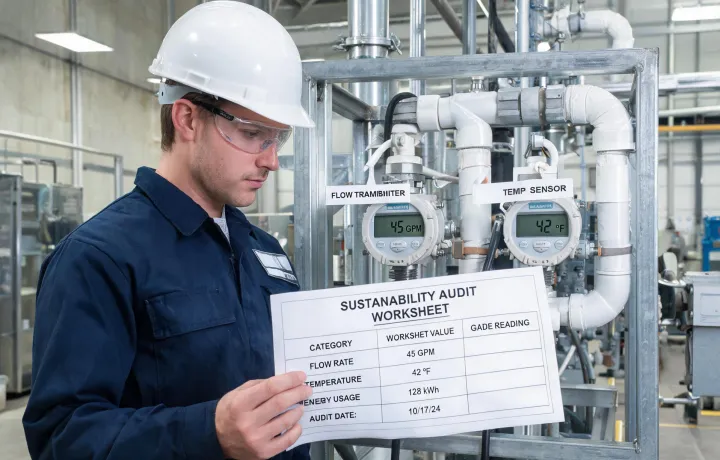
Carbon and resource roadmap
Utility flow, steam use, compressed air, water intake, and temperature profiles need stable instrumentation before reduction targets become credible.
Accurate transmitters and sensors help operators tighten control bands, reduce rework, and avoid energy losses caused by unstable process conditions.
Calibration records, response checks, and instrument service notes support the improvement claim when internal or external reviewers ask for proof.
Replacement planning and recalibration windows protect the data stream after the first project is complete.
Technology contribution
Sustainability work in industrial facilities often fails when the measurement basis is weak. A site may claim a reduction in energy use, water consumption, or waste, but the claim becomes difficult to defend if the underlying instruments were not selected, calibrated, and maintained for that purpose. Emerson treats sustainability as a measurement discipline rather than a branding theme. The process begins by identifying which variables affect the target and whether existing field devices provide sufficient accuracy, response, range, and documentation. A flow meter used for water balance may need different evidence than a transmitter used for process control. A temperature sensor supporting heat recovery may require service records that are irrelevant to a simple local indicator. By clarifying these requirements, the instrumentation program gives managers a more credible path from operational change to verifiable result.
Partnership model
Share the target variable, reporting pressure, and installed device list so Emerson can help define the measurement path.